Aggregate threshold
Measured at PAN level across all strategies offered by the same SIF. Regular mutual fund holdings do not count toward it.

Investor guide
A Specialized Investment Fund is a pooled investment structure offered by an eligible Asset Management Company under the Securities and Exchange Board of India mutual fund framework. Like a mutual fund, it brings investors' money together and follows a disclosed investment mandate. The difference is that a SIF can use more specialised portfolio strategies, including permitted long and short positions through derivatives, while remaining subject to regulatory limits, risk management, and disclosure requirements.
SIFs are intended to bridge the space between conventional Mutual Funds and Portfolio Management Services. They are not a replacement for either, and they are not suitable for every investor. The right choice depends on the strategy, time horizon, liquidity needs, and ability to understand and tolerate additional risk.
At a glance
Measured at PAN level across all strategies offered by the same SIF. Regular mutual fund holdings do not count toward it.
SIFs operate within the mutual fund regulatory framework and are offered only by eligible asset management companies.
Certain strategies may use permitted derivative positions for limited long and short exposure.
The framework provides for equity-oriented, debt-oriented, and hybrid investment strategies.
The pooled portfolio is managed by an eligible AMC and its appointed investment team under a defined mandate.
SIFs require a clear understanding of market, derivative, liquidity, and strategy-specific risks.
Investment spectrum
SIF expands the range of regulated strategies available between conventional pooled funds and higher-ticket portfolio structures. Moving across this spectrum can mean greater flexibility and complexity, but it does not automatically mean better returns.
Broad pooled strategies, usually with lower entry amounts and conventional mandates.
Pooled specialised strategies with additional flexibility and a ₹10 lakh aggregate threshold.
A separately managed client portfolio with a regulatory minimum of ₹50 lakh.
A privately pooled vehicle for alternative strategies, generally with a ₹1 crore minimum, subject to exceptions.
Process
Review the strategy objective, portfolio approach, benchmark, and eligible investor terms.
Meet applicable KYC, PAN-level threshold, and documentation requirements before investing.
Money is pooled in the selected SIF strategy and managed by the AMC's professional investment team.
The fund manager follows the disclosed mandate and may use permitted derivatives and short positions.
Track the risk-band, portfolio disclosures, performance, and whether the strategy still suits your objectives.
The investor chooses and owns units in the strategy. The AMC establishes the SIF, and its fund manager makes portfolio decisions. Ideas2Invest does not manage the SIF portfolio.
Permitted categories
Not every AMC offers every strategy. Always check the current Investment Strategy Information Document.
Strategies focused primarily on listed equity and equity-related instruments.
Strategies investing in debt instruments across duration or selected sectors.
Strategies combining multiple asset classes under a stated allocation framework.
Compare structures
These are general comparisons. Product documents and current regulations govern each offering.
| Parameter | Mutual Funds | SIF | PMS | AIF |
|---|---|---|---|---|
| Regulatory framework | SEBI mutual fund framework | SEBI mutual fund framework with SIF provisions | SEBI Portfolio Managers Regulations | SEBI AIF Regulations |
| Structure | Pooled scheme | Pooled investment strategy | Segregated client portfolio | Privately pooled fund |
| Minimum investment | Scheme-specific; often accessible at lower amounts | ₹10 lakh aggregate across strategies of the same SIF at PAN level | ₹50 lakh | Generally ₹1 crore, subject to regulatory exceptions |
| Portfolio flexibility | Conventional scheme mandate | Greater strategy flexibility within prescribed limits | Mandate-specific and potentially customised | Category and fund-document specific |
| Derivative use | Permitted within mutual fund rules | Permitted long-short use within strategy-specific limits | As permitted by the client mandate and regulations | Depends on AIF category and fund documents |
| Portfolio ownership | Units in a pooled scheme | Units in a pooled SIF strategy | Client owns securities in a segregated account | Units or interest in a pooled fund |
| Liquidity | Depends on scheme type | Varies by strategy and may include a notice period | Depends on portfolio mandate and holdings | Often limited and fund-specific |
| Complexity | Low to high, depending on scheme | Higher than conventional mutual funds | High | High |
| Typical fit | A broad range of investors | Experienced investors who meet the threshold and understand added risk | Investors seeking a separately managed portfolio | Investors able to assess alternative and often illiquid strategies |
Potential advantages
These features do not assure higher or positive returns.
Important risk information
SIFs can be more complex than conventional mutual funds and may result in significant capital loss.
The value of investments can fall because of market movements and economic events.
Derivatives can amplify gains and losses and introduce basis, counterparty, and execution risk.
A short position can lose value when the underlying asset rises instead of falling.
Redemption frequency and notice periods vary, and some holdings may be harder to exit.
A specialised approach may not work as expected in every market environment.
Some mandates may focus on a narrower set of sectors, issuers, or opportunities.
Debt strategies may face credit, interest-rate, spread, and reinvestment risks.
SIFs do not assure returns, and investors may lose part or all of their invested capital.
Suitability
People already comfortable with market-linked products and changing portfolio values.
Investors who meet the threshold without compromising emergency funds or near-term goals.
Those able to remain invested through market cycles and strategy-specific volatility.
Investors evaluating differentiated approaches beyond conventional long-only portfolios.
People who understand derivatives, liquidity constraints, and the possibility of capital loss.
Ideas2Invest support
We help you understand SIF structures, terminology, strategy documents, and key risks.
Review objectives, time horizon, liquidity needs, and risk tolerance before considering a strategy.
Compare available disclosures, portfolio approach, investment process, and fund-management framework.
Receive help with documentation and the investment process where legally and operationally applicable.
Periodically reassess whether the chosen approach remains aligned with your financial objectives.
Ideas2Invest is an AMFI-registered Mutual Fund Distributor, ARN-113588. Any SIF distribution or transaction support is subject to applicable certifications, regulatory requirements, and product availability.
Continue exploring
Direct answers
A Specialized Investment Fund is a pooled, strategy-driven investment offered by an eligible AMC under SEBI's mutual fund regulatory framework. It allows more flexible investment approaches than conventional mutual fund schemes, including permitted long-short strategies.
SEBI introduced the framework to widen the range of regulated investment solutions and bridge the space between conventional mutual funds and products such as Portfolio Management Services.
The AMC must ensure an investor has at least ₹10 lakh in aggregate across all investment strategies offered by the same SIF at PAN level. Regular mutual fund holdings with that AMC are not included in this threshold.
No. SIF operates within the mutual fund regulatory framework, but it is a separate product category with a higher entry threshold, distinct branding, and specialised strategies that may use additional portfolio flexibility.
SIF is a pooled structure in which investors hold units. PMS generally manages a segregated portfolio in the client's name and currently has a ₹50 lakh regulatory minimum. The investment approach, ownership, fees, and liquidity can also differ.
SIF operates under the mutual fund framework and has a ₹10 lakh aggregate threshold. AIF is a privately pooled vehicle governed by separate AIF regulations and generally has a ₹1 crore minimum for investors, subject to specified exceptions.
An investor must meet the applicable PAN-level investment threshold and the eligibility, KYC, and documentation conditions stated by the AMC and relevant strategy documents. Meeting the threshold alone does not make a strategy suitable.
Yes. SIFs are market-linked and can involve relatively higher complexity, derivatives, short positions, concentration, liquidity constraints, and possible capital loss. Risk differs by strategy.
Certain permitted SIF strategies may take limited unhedged short exposure through derivatives within SEBI's prescribed strategy-specific limits. This does not guarantee protection when markets fall.
SEBI's framework permits equity long-short, equity ex-Top 100 long-short, sector rotation long-short, debt long-short, sectoral debt long-short, active asset allocator long-short, and hybrid long-short categories. Actual availability depends on AMC launches.
Yes. SIFs operate under SEBI's mutual fund regulatory framework and must follow specific rules on AMC eligibility, investment limits, disclosures, risk management, and investor thresholds.
NRIs may be able to invest where the AMC and strategy permit it, subject to KYC, FEMA, country-specific, banking, tax, and other applicable conditions. Check the current ISID and AMC documents before applying.
Ideas2Invest can help you understand the product, compare disclosed strategies, discuss suitability, and assist with the process where applicable. Distribution or transaction support is subject to all required certifications, registrations, and product availability.
No. SIF may be unsuitable for investors who do not understand complex strategies, cannot tolerate capital loss, need frequent liquidity, or would have to compromise essential financial goals to meet the threshold.
Tax treatment depends on the nature and classification of the relevant investment strategy and the tax law in force at the time. Review the strategy documents and consult a qualified tax professional for advice specific to your circumstances.
The regulatory explanations on this page were checked against official SEBI material:
Regulations and tax rules can change. Refer to the latest official circulars and strategy documents before acting.
Stay updated with the latest trends in investments and financial planning.
 Mutual Funds
Learn what mutual funds are, how they work, and how to start investing today. Discover the benefits of diversification and professional management for your portfolio.
Read More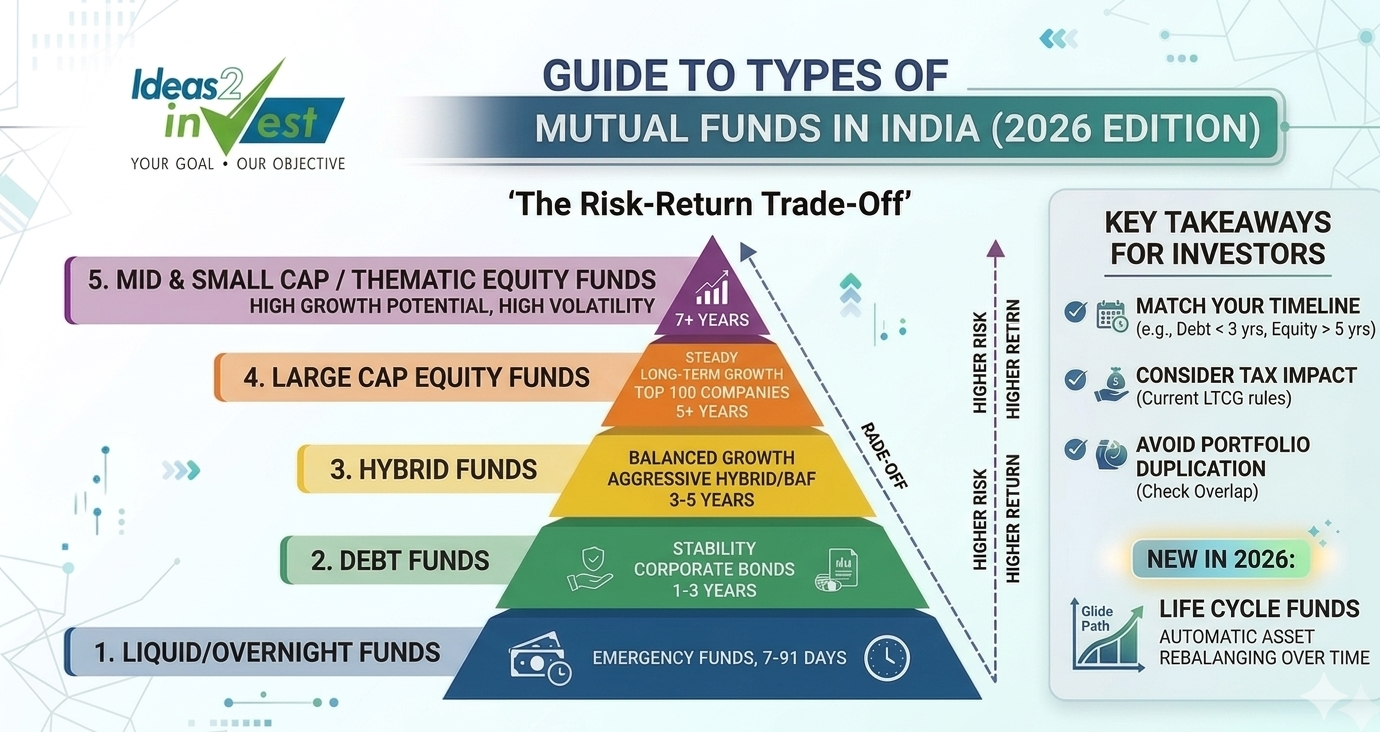 Mutual Funds
Stop guessing with your SIPs. Dive into our comprehensive 2026 guide to Indian Mutual Funds. Learn about the new SEBI Life Cycle Funds, Equity growth engines, and tax-efficient Debt strategies.
Read More Mutual Funds
Is your SIP on autopilot? Discover simple, beginner friendly ways to double your future wealth by making small changes to your monthly investments.
Read More Financial Planning
Is your money sitting idle in a bank account? Learn how to balance the safety of savings with the growth of investing to build an unbreakable financial future.
Read More Investment Philosophy
Real wealth isn't built on luck; it is built on a strong foundation. Learn the simple, honest rules of investing in India's growing 2026 economy.
Read More Wealth Building
Master Understanding the Magic of Compounding with Ideas2Invest. Learn to avoid churning traps and navigate the 12.5% LTCG tax rules for 2026.
Read More Market Strategy
A flat market can silently erode your wealth through inflation. Learn how to navigate a zero-return environment using expert portfolio adjustments and ethical strategies.
Read More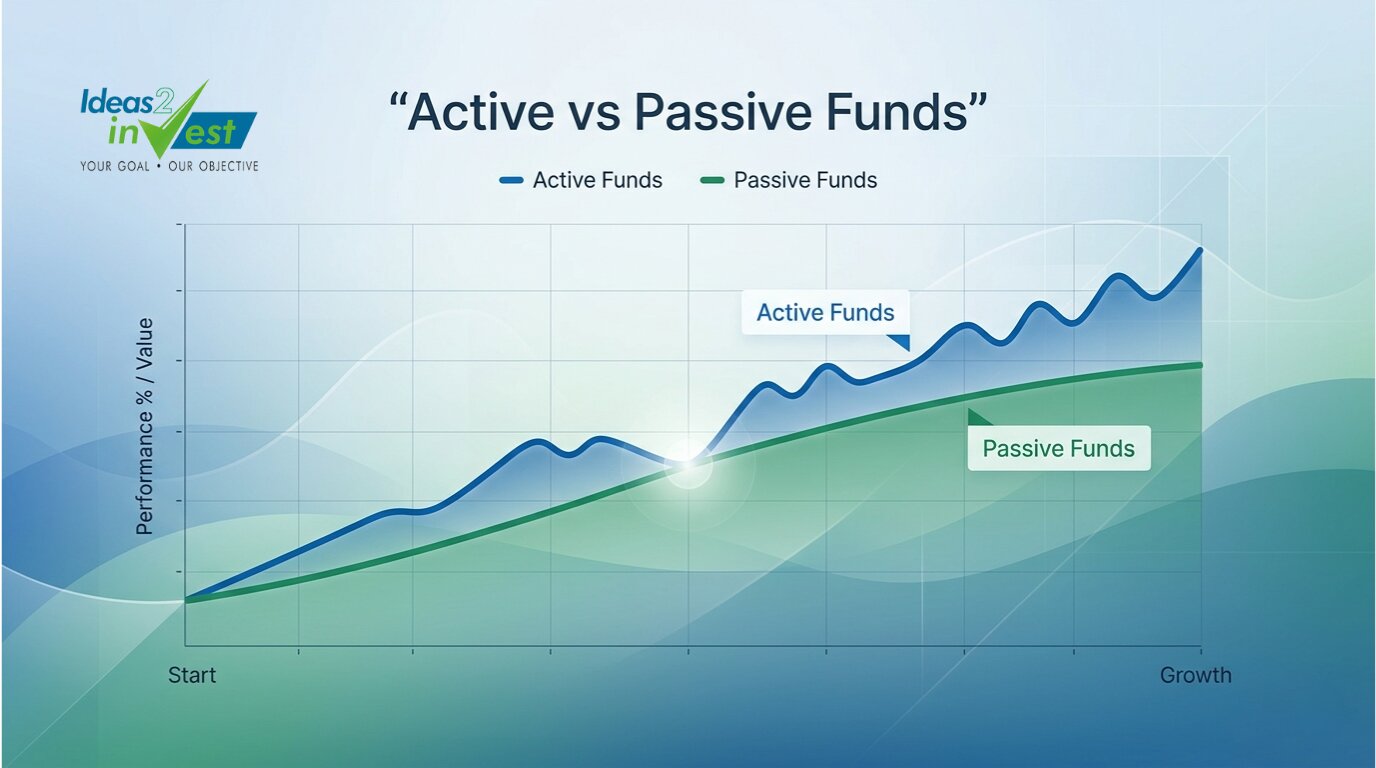 Investment Strategy
Master Active vs. Passive Funds for 2026. Discover why 75% of active managers fail, the secrets of SEBI MF Lite, and the ethical Ideas2Invest blueprint for wealth.
Read More Financial Planning
Stop chasing random returns. Learn how to align your investments with your life milestones through Goal-Based Financial Planning for a stress-free future.
Read More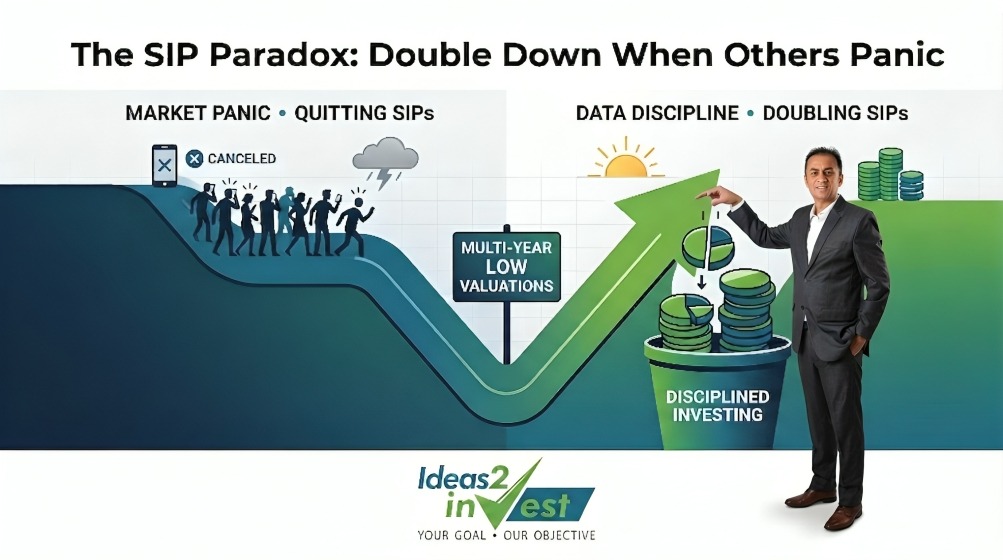 Investment Strategy
Discover why investors are stopping their mutual fund SIPs when they should be doubling them. Ideas2Invest explains how to use hard data to beat market fear.
Read More Tax Planning
Stop letting taxes eat your hard-earned money. Learn how to combine ELSS and tax-efficient insurance-backed plans to build a resilient financial fortress.
Read More Market Analysis
Discover the truth about India's real inflation rate. Learn how hidden costs erode savings and discover expert strategies to protect your long-term wealth.
Read More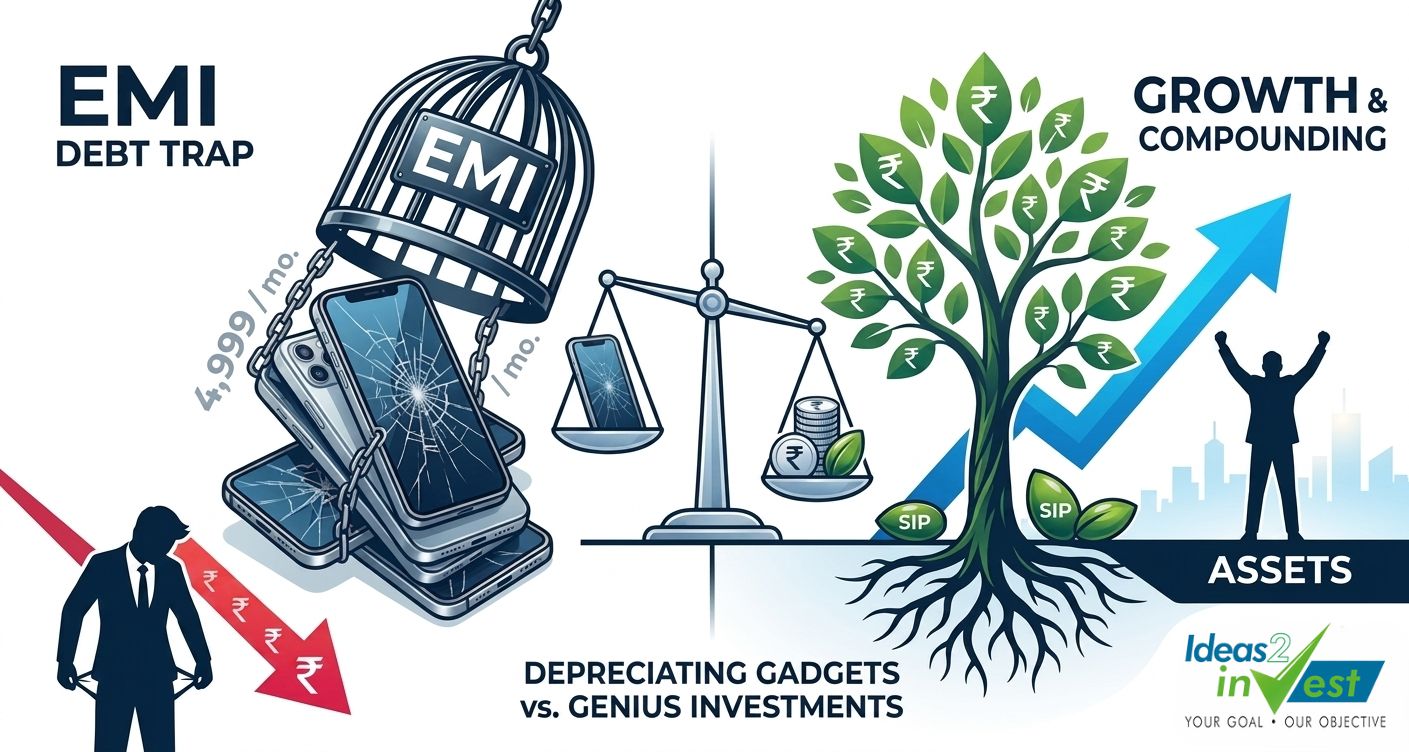 Debt Management
Discover the hidden dangers of the EMI debt trap. Learn how upgrading your gadgets is secretly destroying your future wealth and how to break the cycle today.
Read More Financial Psychology
Master the psychology of investing to build true wealth. Learn why discipline and long-term strategy beat short-term trading in the Indian market.
Read More Investment Strategy
Learn how to smartly divide your money across equity, debt, and gold to build a resilient financial fortress that survives market rollercoasters.
Read More Wealth Management
Clicking a button isn't the same as building wealth. Discover how emotional mistakes and lack of strategy in DIY investing quietly drain your hard-earned savings.
Read More Financial Planning
Life is unpredictable, but your finances shouldn't be. Learn exactly how to calculate and structure your emergency fund for ultimate peace of mind.
Read More Investment Strategy
Time is your biggest financial asset. Discover how delaying your investments by even a few years can cut your retirement wealth in half.
Read More Financial Planning
Discover the 3 most common financial missteps in India-withdrawing PF early, mixing insurance with investments, and idle cash-and how to fix them.
Read More Mutual Funds
Discover why mutual funds provide Indian families a safer, disciplined, and professionally managed path to wealth creation over direct stock picking.
Read More Capital Protection
Learn effective capital protection strategies to protect your core investments from market drops while building sustainable wealth in India.
Read More Mutual Funds
Learn how mutual funds work in simple language. Discover how monthly SIPs, expert fund managers, and balanced investing help Indian families build wealth safely.
Read More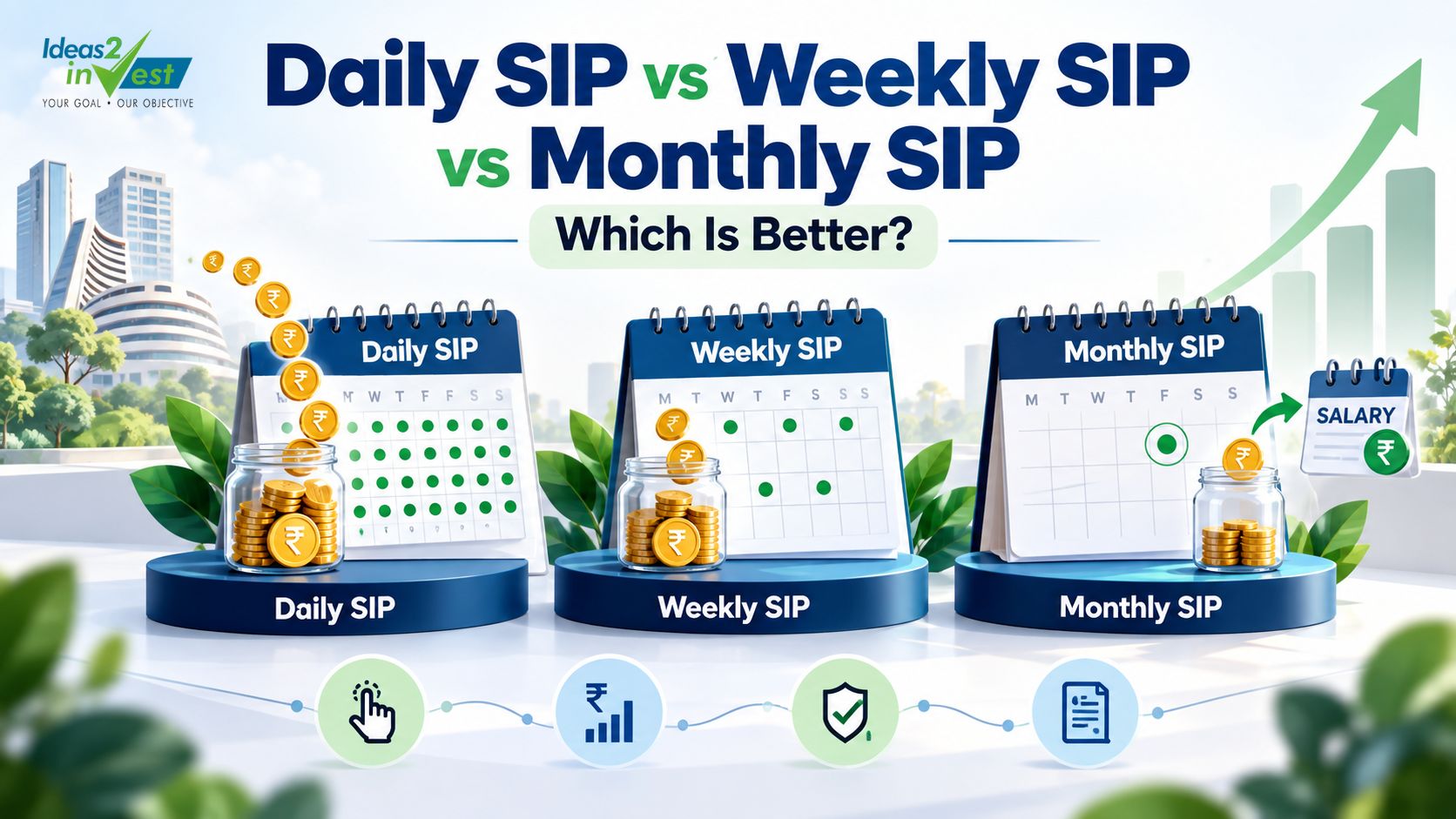 Mutual Funds
Daily, weekly or monthly SIP? Compare returns, cost averaging, convenience and transaction load, then choose the right SIP frequency.
Read More Mutual Funds
Compare arbitrage funds vs liquid funds for short-term parking. Understand risk, liquidity, taxation, exit load and when each option may fit.
Read More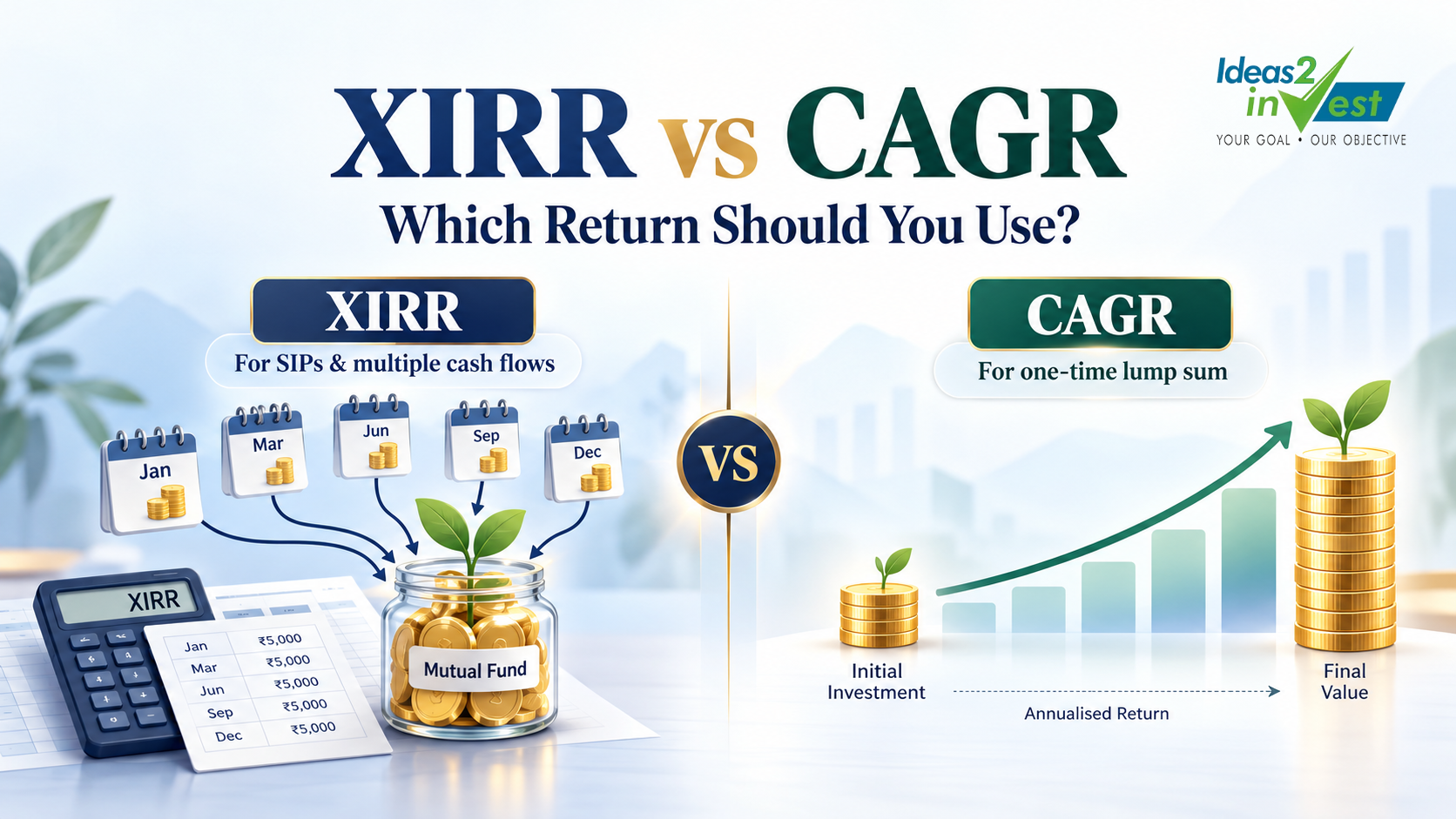 Mutual Funds
Compare XIRR vs CAGR in mutual funds with clear formulas and examples. Learn the key differences, how SIP returns work, and which measure fits your investment.
Read More